

Direct Answer
Branded short links use your own domain, while generic short links use a shared provider domain. Branded links make the sender easier to recognize, support consistent campaign identity, and give teams greater control over published URLs. Generic links are faster to create and can work for temporary or low-risk uses, but they provide less ownership and brand context.
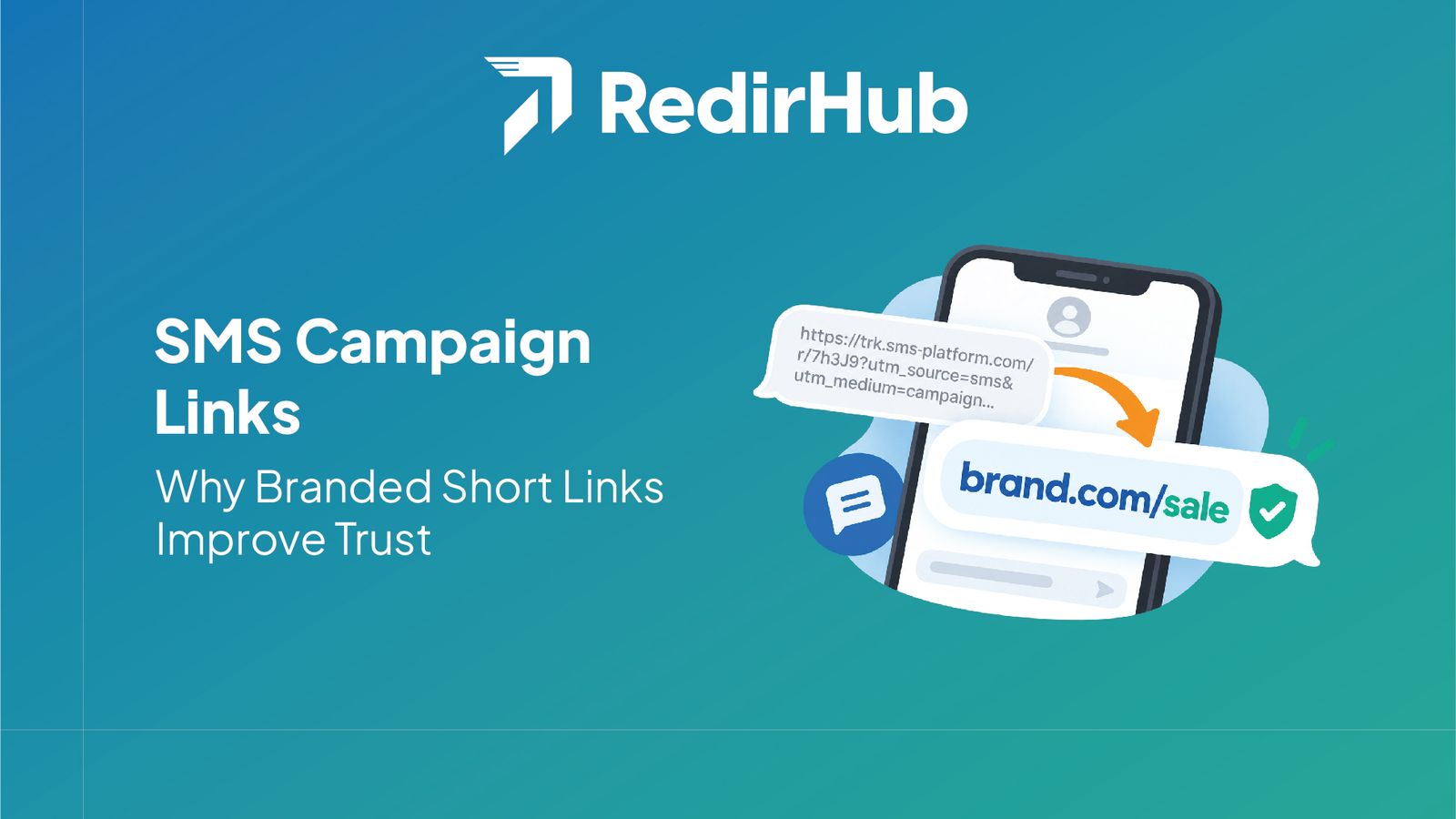
The difference between branded short links and generic short links appears in a few characters, but it changes what your audience sees before they click. A link using your domain can reinforce campaign identity. A link using a shared shortening domain may be compact, but it asks the reader to trust a domain they may not recognize.
For marketers, the choice is not simply about URL length. It is about trust, brand recall, operational control, and the effort required to maintain links across email, paid media, social posts, QR codes, and partner channels.
What are branded and generic short links?#
A generic short link might look like short.example/Ab12Cd. The provider's domain is shared by many customers, and the random path identifies a particular destination. This format is quick and familiar, especially for one-off sharing.
A branded short link uses a domain connected to your organization, such as go.example.com/sale. The path can still be short and memorable, but the visible domain carries context. To manage this setup, teams typically connect the domain, configure redirects, and establish ownership and access rules.
Branded vs generic short links: the practical comparison#
The main trade-off is convenience versus ownership. Generic links are usually quick to create. Branded links require initial domain setup, but they give the marketing team a stable identity for links that appear in public campaigns.
| Factor | Branded short links | Generic short links |
|---|---|---|
| Visible identity | Your domain is visible | Provider's shared domain is visible |
| Trust context | The audience can recognize the brand | Recognition depends on the provider and context |
| Control | More control over domain and governance | Less control over the shared domain |
| Setup | Requires domain configuration | Usually available immediately |
| Best fit | Public, recurring, and high-value campaigns | Temporary, internal, or low-risk sharing |
Trust and click context#
People often evaluate a link in context: who sent it, where it appears, and whether the destination looks plausible. A recognizable domain helps answer the first part of that question. It does not guarantee a click, but it gives the audience more information than an unfamiliar shared domain.
That context matters in paid ads, creator partnerships, newsletters, and offline materials. A branded domain can make the link feel like part of the campaign rather than an unrelated tracking artifact. Teams should still use clear copy, secure destinations, and sensible redirect paths.
Control, flexibility, and campaign operations#
Campaigns change. A promotion ends, a product page moves, or a team needs to test a different destination. A short-link system with destination management can reduce the number of published assets that need to be replaced. Branded links make that operational layer easier to recognize and govern.
When evaluating branded links, look beyond the URL format. Check whether the platform supports the domains, permissions, redirect rules, analytics, and workflows your team actually needs.
When generic short links are acceptable#
Generic links are not automatically wrong. They can be useful for an internal test, a temporary draft, a private collaboration, or a situation where the team cannot configure a custom domain. They are also practical when the link will not be seen by a customer or reused across channels.
The risk is allowing a temporary shortcut to become permanent campaign infrastructure. Before using a generic link publicly, ask whether the asset will be printed, syndicated, embedded in an email sequence, or referenced in a report. The longer the lifespan, the stronger the case for a domain your organization controls.
Why branded links work well for campaign teams#
Campaign teams need a repeatable way to create, review, and maintain links. A marketing campaign workflow can connect each link to a clear owner, destination, audience, and measurement plan. A branded domain then provides a consistent layer across those campaigns.
This is especially useful when multiple people publish links. A shared naming convention and domain reduce ambiguity, while access controls and a central dashboard can make maintenance easier. The exact features vary by provider, so validate them against your process before migrating.
How to choose the right format#
Use branded short links when the link is public, long-lived, tied to a named campaign, or important to brand recognition. Use generic short links when the link is temporary, internal, or part of a quick experiment with limited distribution.
- Choose a domain that your team can maintain and protect.
- Define readable paths and a naming convention before launch.
- Test redirects across devices, browsers, and campaign destinations.
- Track link performance using consistent campaign parameters and reporting.
Migration tips for existing generic links#
Start with an inventory. Record each active URL, destination, owner, channel, and expected end date. Prioritize links in paid campaigns, automated emails, QR codes, partner materials, and evergreen content because those are the hardest to update later.
Next, configure the branded domain, reproduce the redirect behavior, and test the new URLs before changing distribution. Review the platform's plan and limits so your link volume, users, and reporting needs are covered. Keep the old links active for a defined transition period rather than switching everything at once.
The bottom line#
Generic short links optimize for speed. Branded short links optimize for recognizable ownership and repeatable campaign operations. For public marketing campaigns, the additional setup is usually justified by the control and context a custom domain provides; for temporary or internal uses, a generic link may be enough.
Choose the format that matches the link's audience, lifespan, and business importance. Then measure the result with your own campaign data instead of assuming that any URL format guarantees more clicks.
Put your domain to work.
Manage branded links, QR destinations, and redirects from one reliable control layer.
Get StartedFrequently asked questions
A branded short link is a compact URL that uses a domain owned or controlled by your organization, such as go.example.com/sale. It keeps the link short while making the brand visible before someone clicks.
Generic short links use a provider's shared domain, while branded short links use a custom domain. Both can redirect visitors, but branded links give marketers more control over recognition, trust, and the long-term identity of published URLs.
A branded link can make the destination easier to recognize and may support trust, but there is no universal uplift to promise. Measure the effect with your own campaign data and compare like-for-like audiences, channels, and creative.
Generic short links can be acceptable for temporary internal sharing, low-risk experiments, or situations where a custom domain is not available. They are less suitable for campaigns that need consistent brand recognition or long-term ownership.
Redirect management systems can let teams update a link's destination without replacing the URL in every published asset. Confirm the available controls, redirect behavior, permissions, and audit requirements with your provider.
Not necessarily. Prioritize branded links for paid campaigns, lifecycle email, partnerships, QR codes, and other public touchpoints where recognition and control matter. Use generic links selectively when speed matters more than brand continuity.
Inventory active links, choose a domain that your team can maintain, configure the domain and redirect rules, test every destination, and update high-value campaign assets first. Keep the old links working for as long as your audience and published materials require.

Leo Astarothman is the Brand & Content Lead at RedirHub, where he shapes the company's visual identity, educational content, product experiences, and marketing strategies. He also specializes in system design. Simplifying complex redirect infrastructure into practical resources, product experiences, and campaigns that help businesses understand and adopt modern redirect management.
Related Articles
View All Articles