
API tokens let scripts and other services use the RedirHub API on your behalf. Each token works for one workspace and acts with your role there, so a token can do what you can do in that workspace. API tokens are available on every plan.
Step 1: Open API tokens#
Open your account settings and click API tokens. The list shows each token’s name, workspace, when it was last used and when it expires.
Step 2: Create a token#
- Click Create token.
- Give it a name you will recognise, such as the service that will use it.
- Choose the workspace it works for.
- Choose when it expires: no expiration, 30, 60, 90 or 180 days, or 1 year.
Step 3: Copy the token#
The token is shown in full only once, right after you create it. Click Copy token and keep it somewhere safe, such as a password manager or your service’s secret store. Send it with every request in the header Authorization: Bearer <token>.
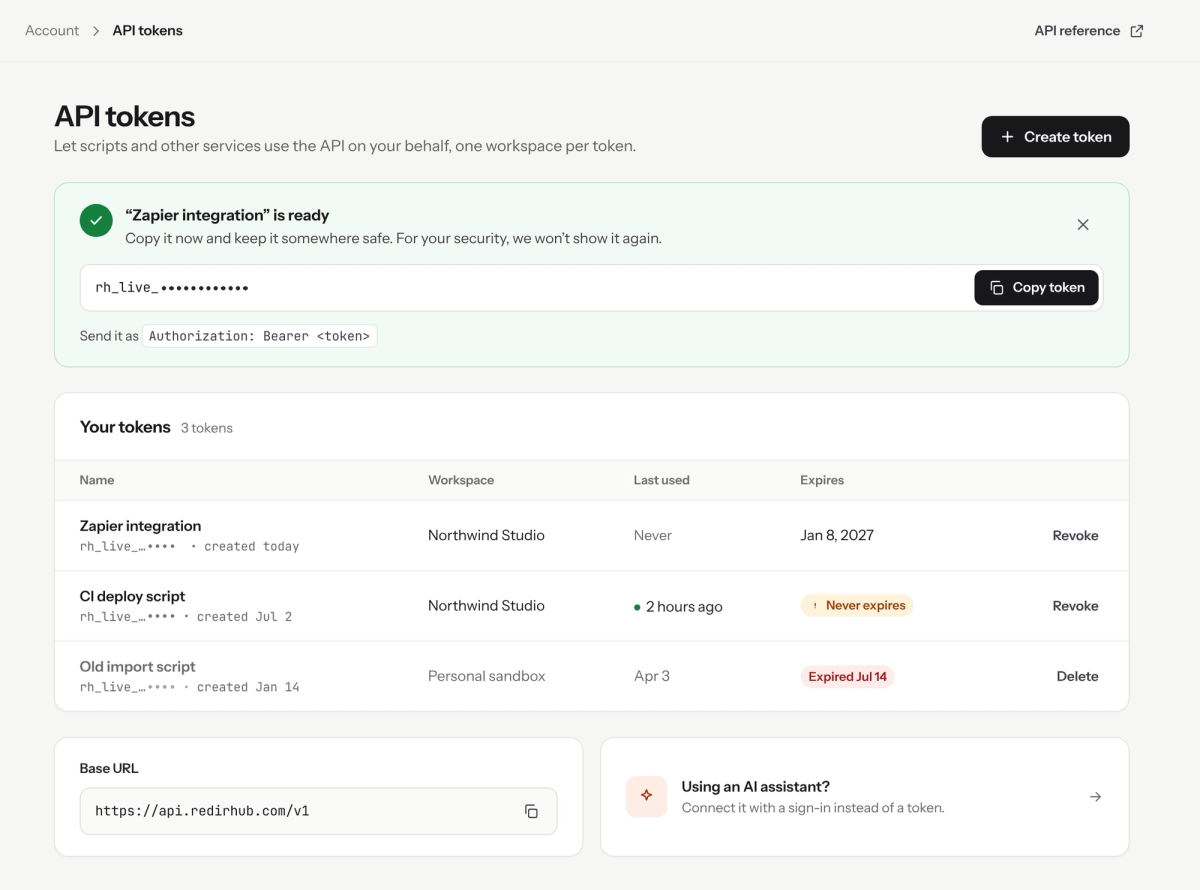
A new token is shown in full only once. Copy it right away.
Treat a token like a password
Anyone with the token can use the API with your role in that workspace. Never share it in chat, email or public code.
Step 4: Revoke tokens you no longer need#
Click Revoke next to a token to stop it working, for example when a service is retired or a token may have leaked. Expired tokens are marked in the list and can be deleted.
Good to know#
- If you lose a token, create a new one and revoke the old one. A token can’t be shown again.
- Prefer an expiry date. A token that never expires is flagged in the list.
- Endpoints, examples and the base URL are in the API reference.
- AI assistants don’t need a token: they connect to the RedirHub MCP server at https://mcp.redirhub.com with a sign-in.
Frequently asked questions
No. A token is shown in full only once. If you lose it, create a new token and revoke the old one.
A token works for one workspace and acts with your role there. A Viewer’s token can only read; an Editor’s token can also change links, QR codes and domains.
You choose when you create the token: no expiration, 30, 60, 90 or 180 days, or 1 year.
The API reference at /docs lists every endpoint with examples.